Most content operations advice assumes a single team sitting in one office, working in one time zone, and operating from a shared understanding of the brand.
That assumption breaks the moment a marketing organization spans regions, contractors, agencies, and languages—which describes many B2B SaaS companies once they expand beyond their first market.
A workflow that feels efficient when the writer, editor, subject matter expert, and approver are online at the same time can become painfully slow when each handoff crosses a time zone. Brand guidance that feels obvious to an internal team can be interpreted differently by a freelance writer in another country. Tools adopted independently by regional teams can create fragmented data, duplicated work, and competing versions of the truth.
Solving those problems requires more than buying a content operations platform. It requires a content operations stack that combines ownership, governance, workflows, technology, and measurement.
Here’s how to build that stack for a distributed team from the start rather than retrofitting it after the chaos sets in.
Why standard content ops playbooks break down for distributed teams
Most published content operations frameworks are designed around co-located teams.
Even when they don’t say so explicitly, they assume:
- Feedback can be gathered within a few hours.
- Ambiguous briefs can be clarified in a quick conversation.
- Writers and editors share an intuitive understanding of the brand.
- Stakeholders are reachable during roughly the same working hours.
- Everyone uses the same tools in broadly the same way.
Distributed teams can’t rely on those conditions.
A question sent from London at the end of the day may not receive an answer from San Francisco until the following afternoon. A regional writer may adapt a product claim in a way that sounds more persuasive locally but is no longer accurate. One market may plan campaigns in Asana, another in a spreadsheet, and another in a collection of Slack threads.
The result isn’t simply “remote work friction.” It’s an operational delay caused by a system that depends on synchronous access and informal context.
Common failure modes include:
- Async handoffs that stall for an entire working day.
- Regional and freelance writers independently interpreting brand voice.
- Local teams adopting tools that don’t integrate with the central stack.
- Approval chains that depend on one senior stakeholder being available.
- Duplicate campaigns being developed in separate markets.
- Final assets becoming difficult to find or reuse.
- Performance data being reported differently across regions.
These aren’t primarily tooling problems. They are coordination and governance problems that technology can support but can’t fix on its own.
Before adding another platform, the team must decide who owns what, which decisions can be made locally, where information lives, and how work moves when nobody is online at the same time.
The layers of a global content operations stack
A content operations stack is often described as a collection of software. For a global team, that definition is too narrow.
The most effective stacks have five connected layers:
- People and ownership
- Governance and brand standards
- Workflows and handoffs
- Technology
- Measurement
A weakness in any one layer creates pressure on the others. Better software can’t compensate for unclear ownership. A comprehensive brand guide won’t help if contractors can’t find it. A well-designed workflow will still produce the wrong behavior if teams are rewarded only for publishing volume.
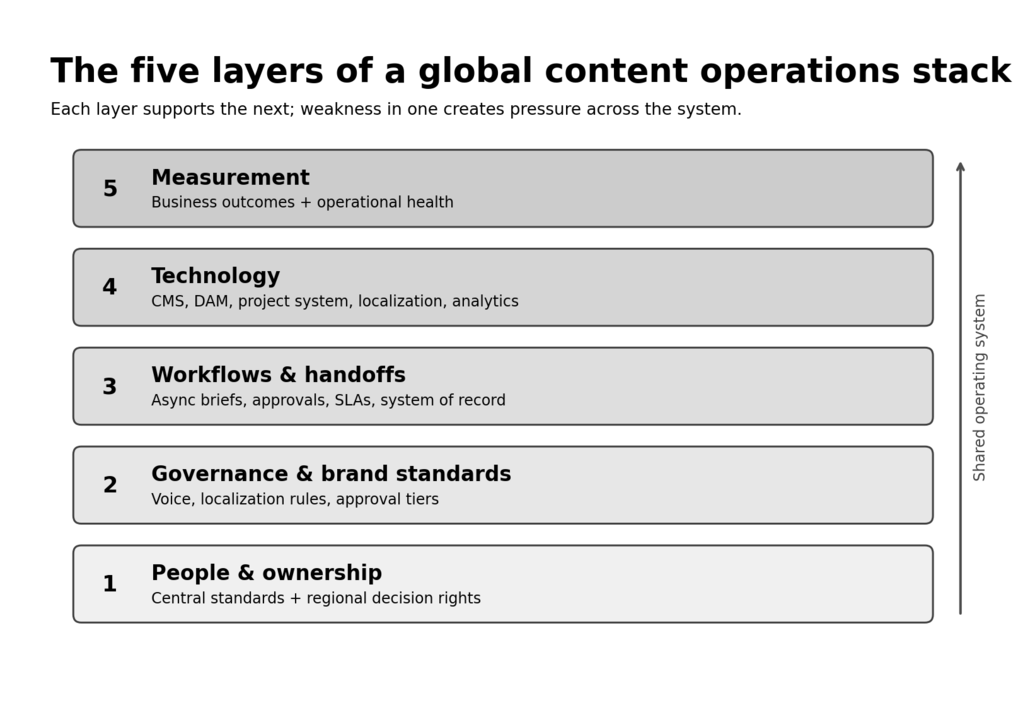
Figure 1. Five layers of a global content operations stack. Source: Author’s illustration based on the framework in this article.
People and ownership
A global content program needs a clear division between central ownership and local decision-making.
The central content owner—often based at headquarters—typically owns:
- Content strategy and portfolio priorities
- Brand positioning and messaging
- Shared editorial standards
- Global technology and data architecture
- Company-wide performance reporting
- Governance for high-risk claims
Regional or channel owners should then have real authority over decisions that require local knowledge, including:
- Market-specific topics
- Cultural references and examples
- Regional subject matter experts
- Distribution channels
- Campaign timing
- Local customer evidence
- Adaptation of approved global assets
The word “authority” matters. Regional owners who are responsible for execution but can’t make decisions will still need to escalate every meaningful choice to headquarters. That creates a centralized bottleneck disguised as a distributed model.
At the same time, fully decentralizing the program usually creates a different set of problems: duplicated work, inconsistent messaging, fragmented vendors, and competition for the same internal resources.
Most scaling teams therefore land on a federated model. Strategy, standards, and shared infrastructure are managed centrally, while regional teams retain defined decision rights within those guardrails.
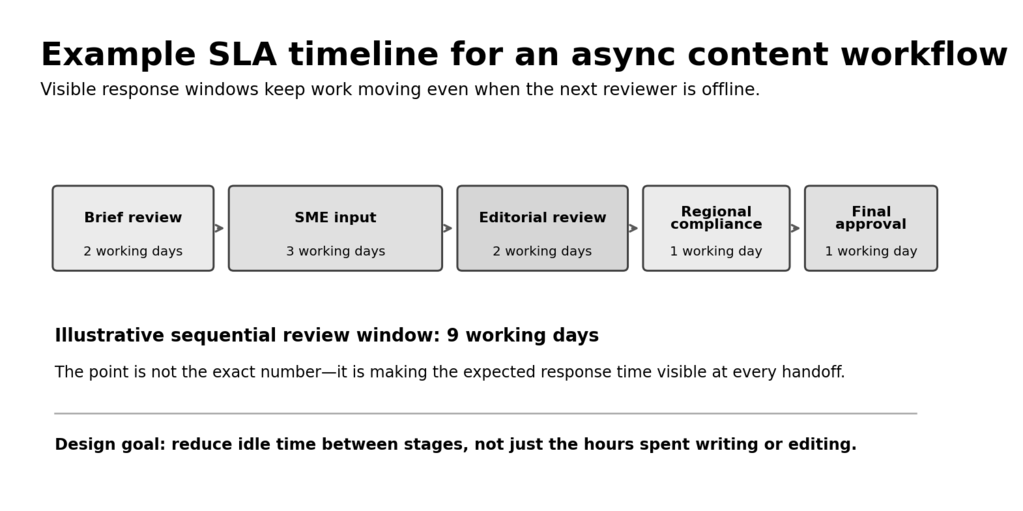
Figure 2. Example RACI-style decision-rights matrix for a federated content team. Source: Author’s illustration based on this article; RACI role definitions adapted from Asana: https://asana.com/resources/raci-chart
This resembles the balance behind decentralized content marketing: expertise and execution are distributed. The program still operates against a shared strategic direction.
Contractors and agencies also need to be treated as participants in the operating system rather than exceptions to it. Outside contributors should receive:
- Access to the relevant source-of-truth documents
- The same brief structure used internally
- Named owners for questions and approvals
- Clear deadlines and response expectations
- Defined permissions within the project system
- Feedback that is recorded and reusable
When agencies and freelancers are forced to operate through private email threads and temporary documents, their work sits around the content operations stack instead of inside it.
Governance and brand standards across markets
Global governance should protect the brand without forcing every regional decision through headquarters.
A practical governance layer includes three core resources.
A living brand and voice guide
This should explain how the brand communicates, not merely list abstract adjectives such as “confident” or “human.” It should include approved examples, prohibited language, product terminology, claim standards, formatting conventions, and guidance for common content formats.
The guide should be searchable, easy to update, and concise enough that a new contractor will actually use it.
Localization rules
Localization isn’t the same as translation.
Translation changes the language. Localization determines what must change—and what must remain consistent—for a piece of content to work in a particular market.
The rules should clarify:
- Which messages are globally fixed
- Which examples can be replaced
- Whether statistics need local sources
- Which customer stories can be used in each region
- How legal and compliance language varies
- Which calls to action are available in each market
- When a new regional asset is preferable to adapting a global one
A lightweight approval path
Not every asset needs the same level of scrutiny.
A low-risk educational post may only need regional editorial approval. A product comparison containing competitive claims may require input from product marketing. A regulated or contractual claim may need legal review.
Creating approval tiers helps teams apply scrutiny where it matters without sending every social post through a five-person chain.
Without this governance layer, a claim that is accurate and credible in one market can become misleading in another. A customer result may rely on a product feature that isn’t available regionally. A statistic may come from a source buyers in that market don’t recognize. A phrase that sounds authoritative in one language may sound exaggerated after translation.
These inconsistencies do more than make the brand untidy. They affect credibility. When buyers encounter conflicting claims across regional pages, sales materials, and search results, they have less reason to trust any one version.
Workflow and handoffs for async teams
Distributed content workflows should be designed to keep moving when the person responsible for the next step is offline.
That begins with the brief.
A global content brief must contain enough information for a writer to make progress without scheduling a clarification call. At minimum, it should define:
- The target audience and market
- The business objective
- The search or distribution opportunity
- The core argument
- Required product connections
- Approved evidence and sources
- Regional considerations
- Subject matter experts
- Internal-link opportunities
- The intended conversion action
- The approver for each review stage
Strong briefs reduce interpretation gaps and make scalable content production possible without reducing every writer to a checklist operator.
Each handoff should also have a service-level agreement. For example:
- Brief review within two working days
- Subject matter expert input within three working days
- Editorial review within two working days
- Regional compliance review within one working day
- Final approval within one working day
The exact targets matter less than making expectations visible. Without them, every delay becomes an individual follow-up, and project managers spend their time chasing stakeholders rather than improving the system.
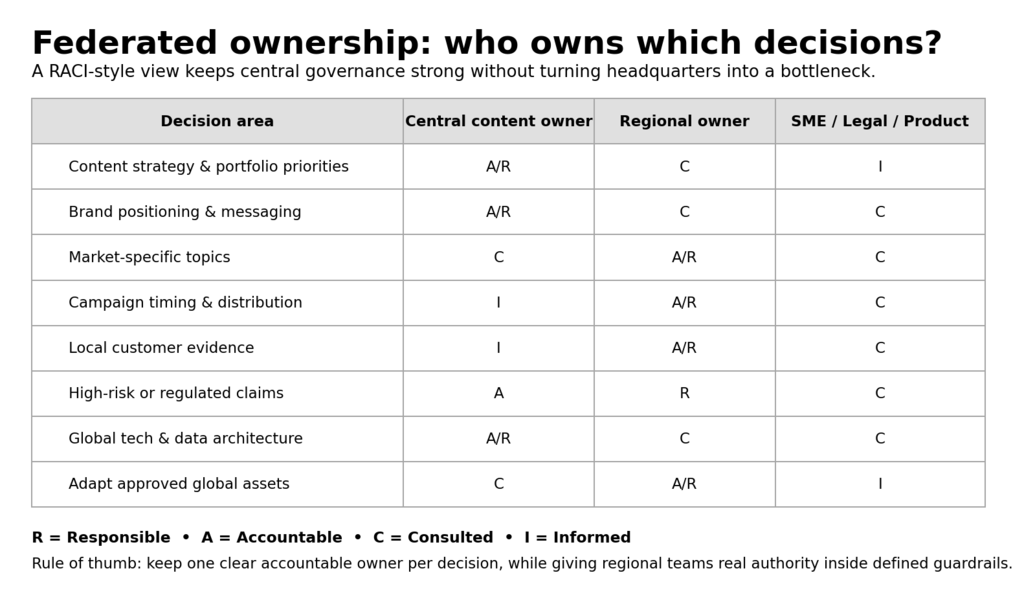
Figure 3. Example service-level timeline for async content reviews. Source: Stage targets from this article; SLA concept adapted from Atlassian: https://www.atlassian.com/itsm/service-request-management/slas
The workflow should live in one system of record. Slack and email can alert people that action is required. They shouldn’t be the only place where status, feedback, or approval decisions exist.
This is where distributed teams lose much of their time. The writing may take four hours, while the idle periods between briefing, expert review, editing, and approval stretch the project across three weeks.
Good workflow design compresses those idle periods.
For related guidance, see these remote team productivity tools and content planning tools for SEO-driven teams.
The technology layer
Once the ownership model and workflow are defined, the team can select technology to support them.
A global content operations stack will usually include several categories.
Content management system
The CMS or headless CMS controls publishing, permissions, content structure, and regional versions. It should support the team’s localization model without turning every market update into a development request.
Digital asset management
A digital asset management (DAM) system gives teams a shared library for approved logos, product screenshots, videos, illustrations, campaign assets, and regional variations.
Assets should be tagged by market, language, campaign, usage rights, and approval status so teams can find the correct version without contacting headquarters.
Project management or content operations platform
This becomes the operational system of record. It should show each asset’s owner, market, status, deadline, dependencies, and approval history.
The best platform isn’t necessarily the one with the most features. It is the one the entire team will update consistently.
Localization and translation tooling
For multilingual programs, translation management software can centralize terminology, translation memory, review, and publishing workflows.
The technology should support regional judgment rather than treating localization as a mechanical word-replacement exercise. The way Omniscient helped Smartling connect content strategy with commercial outcomes offers a useful example of building a content program around the needs of a localization-focused business in its Smartling case study.
Analytics
Analytics should connect content activity to commercial signals such as qualified traffic, assisted conversions, pipeline influence, and sales usage.
Regional teams may still require local views. The underlying definitions should remain consistent enough that leadership can compare performance without reconciling several incompatible dashboards.
Security and access infrastructure
Distributed teams also need a controlled process for granting platform access, protecting credentials, and managing subscriptions across regions. During a stack audit, document the owner, renewal date, access policy, and pricing model for every recurring service, from editorial platforms to connectivity tools. Reviewing costs such as Mysterium VPN pricing alongside other subscriptions prevents duplicate regional purchases, unmanaged accounts, and unnecessary renewals.
Integration matters more than tool count.
A project platform that can’t pass approved assets to the CMS creates manual work. A DAM that doesn’t connect to design and publishing systems becomes another folder people forget to check. Analytics that can’t connect content engagement with CRM data leaves the team measuring traffic rather than business impact.
The goal isn’t to build the largest stack. It is to minimize re-entry, status chasing, version confusion, and invisible work.
AI belongs within this layer, but its role should be realistic.
It can support:
- First-draft generation
- Brief development
- Content repurposing
- Localization assistance
- Source synthesis
- Metadata creation
- Quality-control checks
- Repetitive content updates
AI cannot determine which claims a regional audience will trust, negotiate ownership conflicts, or establish the company’s point of view. It accelerates a functioning system. It doesn’t replace governance and judgment.
Teams also need to consider how their content is discovered beyond traditional search. A global operation may need consistent product facts, structured evidence, and authoritative brand references that can surface in AI-generated answers. That makes generative engine optimization another consideration within the broader distribution and measurement stack.
Measurement that reflects the business, not just output
Publishing volume is easy to measure and easy to misunderstand.
A team can increase the number of articles, campaigns, and localized pages it produces while also increasing rework, slowing approvals, and generating little commercial impact.
A stronger content operations scorecard combines business outcomes with operational health.
Useful measures include:
- Pipeline influenced by content
- Qualified conversions
- Time from approved idea to publication
- Time spent waiting between workflow stages
- Percentage of work delivered on schedule
- Rework or revision rate
- Asset reuse across markets
- Localization turnaround time
- Sales usage of content
- Cost per approved or published asset
Measurement becomes less precise as markets, channels, and buyer journeys multiply. Attribution models rarely capture every meaningful interaction.
That isn’t a reason to retreat to output metrics.
Directional data, self-reported attribution, CRM notes, customer interviews, and sales feedback often provide a more honest view than a dashboard claiming exact credit for every touchpoint.
The objective isn’t perfect attribution. It is enough evidence to decide where to invest, where work is slowing down, and whether the operating system is improving.
This distinction becomes increasingly important in enterprise content marketing, where organizational friction can restrict growth even when the company has substantial resources.
How to build the stack: A step-by-step approach
1. Audit the current state
Map how a piece of content moves from idea to publication today.
Document every:
- Owner
- Tool
- Handoff
- Approval
- Template
- Communication channel
- Reporting destination
Include the unofficial process.
Regional teams may have created private spreadsheets, hired separate vendors, or bypassed central reviews because the formal system was too slow. Those workarounds are valuable evidence. They show where the current process no longer serves the people expected to use it.
Look for duplicated data, unclear ownership, manual transfer, excessive waiting, and steps that exist only because a previous tool or manager required them.
2. Define governance and ownership before selecting tools
Decide which responsibilities belong centrally, regionally, and jointly.
For each major decision, identify who:
- Recommends
- Decides
- Executes
- Reviews
- Must be informed
Set approval tiers, escalation rules, and regional decision rights before configuring software.
Tools tend to solidify whatever process is built into them. Selecting technology first can therefore calcify an ownership model the organization has not deliberately chosen.
3. Design for the worst-case time zone gap
Build the workflow for the moment when one team is ending its day as another begins.
Ask whether a contributor can complete the next stage using only the written information available in the system. If the answer is no, improve the brief, instructions, or decision rules.
A distributed workflow shouldn’t depend on everyone finding a shared hour for a meeting.
Use synchronous conversations for genuinely ambiguous or strategic decisions—not routine status checks and missing context.
4. Select and integrate technology against the workflow
Evaluate tools against specific operational requirements.
Instead of asking whether a platform has good collaboration features, ask:
- Can contractors access only the projects they need?
- Can regional teams create local variants without duplicating the master asset?
- Can approval status pass automatically to the publishing system?
- Can users find the approved brand asset from inside the workflow?
- Can reporting data be segmented by region without changing metric definitions?
- Can the platform support the organization’s data and security requirements?
Every tool should remove a named source of friction. If it creates another system employees must manually maintain, its operational cost may exceed its benefit.
5. Pilot before rolling out globally
Test the model with one region, campaign, or content type.
Choose a pilot that is meaningful enough to expose real constraints but contained enough to adjust without disrupting the entire organization.
During the pilot, track:
- Time spent at each stage
- Questions that repeatedly block progress
- Approval delays
- Missing permissions
- Rework causes
- Local exceptions
- Tool adoption
- Stakeholder satisfaction
Regional feedback should shape the final system. A global process designed entirely by headquarters will often optimize for central visibility while making local execution harder.
The pilot is an opportunity to correct that imbalance before the workflow becomes policy.
Common pitfalls when scaling content ops globally
Overcentralizing decisions at headquarters
Central teams may try to protect quality by retaining approval rights over every asset.
In practice, that slows regional teams, overloads senior reviewers, and encourages local teams to work around the system. Centralize standards and high-risk decisions, not every editorial judgment.
Treating localization as translation
A grammatically accurate translation can still feel culturally irrelevant, commercially weak, or untrustworthy.
Localization should account for market evidence, buyer expectations, examples, product availability, channels, and compliance—not just language.
Adding tools to solve process problems
A new platform can’t fix an undefined handoff.
When people don’t know who owns approval, adding automation simply moves the ambiguity into a new interface. Define the operating model first, then use software to reinforce it.
Measuring activity instead of outcomes
A dashboard showing that the team published 40 assets doesn’t reveal whether those assets influenced pipeline, supported sales, or required excessive revision.
Pair output with commercial signals and operational measures such as rework rate and time to publish.
Creating governance nobody can use
A 60-page brand guide stored in an unfamiliar folder isn’t an effective control.
Governance must appear within the workflow: in briefs, templates, review checklists, CMS fields, terminology databases, and searchable knowledge systems.
Build the operating system before expanding the toolset
A global content operations stack isn’t a shopping list.
It is an operating system that gives distributed teams enough shared structure to stay aligned and enough local authority to move quickly.
The strongest systems make ownership explicit, turn brand knowledge into accessible guidance, design handoffs for asynchronous work, connect a small number of trusted tools, and measure whether the operation is producing business value—not just more assets.
If your content program is outgrowing what a single-team playbook can support, a free strategy call is a good place to pressure-test your current stack against what a distributed team actually needs.
Frequently asked questions
What’s the difference between content operations and content strategy?
Content strategy determines what content a company should create, who it should serve, and how it will support business goals. Content operations define how that strategy is executed repeatedly. It covers ownership, briefs, workflows, approvals, technology, asset management, and measurement. Strategy provides direction. Operations creates the system that allows teams to follow that direction consistently and efficiently.
What tools do distributed marketing teams need for content operations?
Distributed marketing teams typically need a CMS, digital asset management system, project or content operations platform, shared knowledge base, analytics stack, and—when working across languages—localization or translation software. The specific products matter less than whether they integrate with one another and support the team’s defined workflow. A smaller connected stack is generally more effective than a large collection of isolated tools.
How do you keep brand voice consistent across regional or freelance content teams?
Keep brand voice consistent by providing a practical, living guide supported by approved examples, terminology, content templates, and market-specific localization rules. Give contributors detailed briefs and record editorial feedback in a shared system so the same corrections don’t need to be repeated. Regional teams should also have room to adapt examples and phrasing while keeping core positioning, product facts, and credibility standards consistent.