
I’ve created many reports, and I’ve reviewed many reports.
These reports have spanned experimentation and SEO to holistic GTM and pipeline reporting.
Here’s something that I used to see all the time with organic growth reporting: a slide (a prominent one) reporting tracked keyword movements for twenty target terms with nominal increases or decreases. Keyword one went from position nine to six: good. Keyword two went from position eight to twelve: bad.
The problem is that this reporting framework prioritizes indicators several steps removed from business outcomes. And what we choose to measure shapes what we choose to optimize. When success is defined by incremental ranking improvements, the range of strategies we’re willing to consider narrows accordingly.
Rankings are one signal, and sometimes a useful one. But this frame treats organic growth as a game of inches – a contest where the margin between a good program and a great one is a series of small output optimizations, leading to tactical hell and checklists like creating a better title tag, a tighter meta description, or pushing a draft through Surfer every few months.
The implicit promise is that if you win enough of these small battles, they will add up to a large victory.
But incremental optimization cannot compensate for a fundamentally limited strategy.
It can help you climb to the top of a hill, but it can’t tell you whether there is a higher hill you should be climbing.
The Red Queen Returns
In Lewis Carroll’s “Through the Looking-Glass,” the Red Queen tells Alice that in her country, “it takes all the running you can do, to keep in the same place.”
The line has been borrowed by evolutionary biologists to describe arms races between species, and it applies to so many issues in tactical SEO and AEO, especially with the advent of generative AI and agents.
You improve your internal linking, and then competitors improve theirs.
You optimize your page speed, and then optimize theirs.
You update your content for freshness, then they do the same (now with automation that makes the updates cheaper and faster).
You buy your place on third party listicles, then they do the same (but they have a higher budget, so you need to increase yours in turn).
Everyone runs faster, but nobody gains a durable advantage. As tactics become cheaper to replicate and more widely adopted, their ability to differentiate one company from another diminishes.
These optimizations can still produce meaningful gains, but when everyone has access to the same playbook and tools, they become a cost of staying competitive rather than a source of lasting advantage.
The result, over time, is tactical fatigue.
It shows up in conversations I have all day with prospects and clients. The team is exhausted, the executives are skeptical, and the program feels incremental because it is incremental. Nowadays, this sounds like “we’ve been trying, trying, trying, but our traffic is drying, drying, drying up.” The implicit question here is, “what else is there? What’s the horizon I’m not seeing?”
When the entire effort is organized around output optimization, the ceiling is built into the approach.
The answer lies in the game of inches that is upstream of the outputs.
The Category Error
There is a fundamental difference between improving performance within an existing system and building an advantage that changes the economics of the system itself.
A marginal difference in an output is the gap between position seven and position three or between a 3.2% click-through rate and a 4.1% click-through rate or between 12,000 monthly organic sessions and 14,500 or between 16% AI visibility and 19% AI visibility.
These metrics can be useful optimization targets, but they tell us relatively little about whether the underlying strategy creates a durable advantage
But structural advantages operate differently. Rather than improving a single performance metric, they change the conditions under which the entire program operates.
These advantages often don’t look like much at the outset, and they rarely show up directly on a keyword tracking dashboard. Some are simply difficult to replicate. The most powerful go further by creating reinforcing loops in which each success strengthens the underlying advantage, making future successes easier or more valuable.
This is, by and large, the thesis of the book Product-Led SEO by Eli Schwartz – to approach organic growth as a product in itself, something that adds or creates unique value, provides a great user experience, solves problems, instead of relying on traditional, keyword-stuffed blog content and brute force link building.
AEO & The Dissolving Inch
The rise of AI search makes it clearer that optimizing for small ranking fluctuations is the wrong target.
When visibility varies across prompts, platforms, and individual responses, the relationship between a tactical optimization and a measurable output becomes harder to isolate.
I’ve written about this mental model shift in Probability Engineering. The idea is that AI search is a probabilistic system, not a deterministic one, and that the appropriate response to a probabilistic system is to shape a distribution of influence rather than hold a rank.
A keyword ranking implied a sense of stability. In AI search, retrieval and responses can vary across runs, platforms, and users.
AI visibility is not consistently represented by one stable position. That doesn’t make optimization impossible, but it changes what we’re optimizing for: a higher probability of being discovered, cited, and recommended across a distribution of buyer journeys.
The scoreboard has become complicated. We can still measure visibility, citations, and competitive presence across AI platforms, but it is increasingly questionable to treat small movements on any single metric as evidence of meaningful strategic progress.
The things that remain legible like brand authority, proprietary insight, the density of your presence across the sources that models ingest are input advantages, and there are many ways to creatively identify upstream advantages to accumulate brand authority, proprietary insight, and the density of your presence across the sources that models ingest.
Focusing on the upstream levers may have a longer lag time, but I think you’ll find it’s a different, more effective, and more fun game to be playing than chasing affiliate blogs to pay for placements.
Unique Advantages and Compounding Engines
So far I think my argument has been largely uncontroversial: focus on structural advantage and differentiated value, not just marginal output optimization on things like keyword rankings.
Useful to illustrate through a few examples,, some of which you probably already know. Note, these are views from the outside, and I am just as prone to cognitive biases (survivorship, Cargo Cult, Halo Effect) as anyone.
Zapier
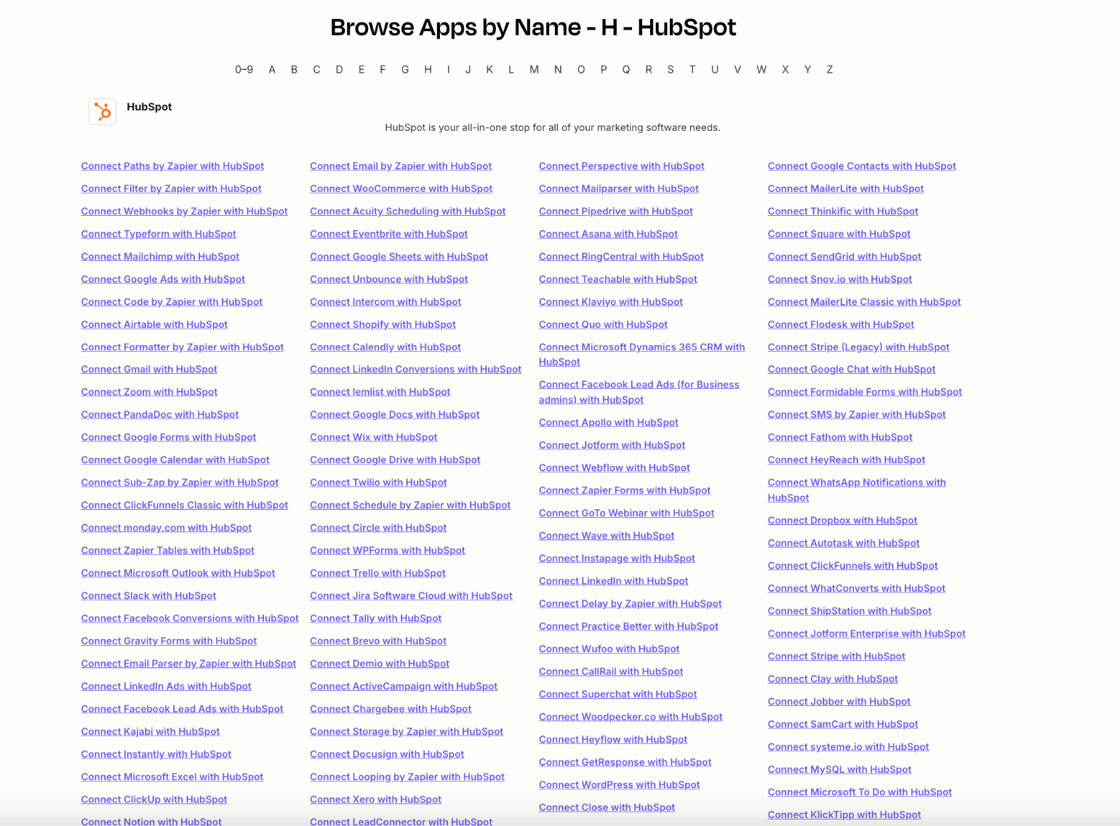
Every integration Zapier supports generates a page, which is a useful artifact: how to connect these two tools, what workflows are possible, step-by-step instructions for setup. Each new integration partner creates a new piece of content that targets a specific, intent-rich query. The input advantage is the product itself: the integrations. The content is a byproduct.
The result is tens of thousands of pages that collectively capture an enormous share of long-tail search, and competitors cannot replicate the pages without first replicating the integrations.
Gong
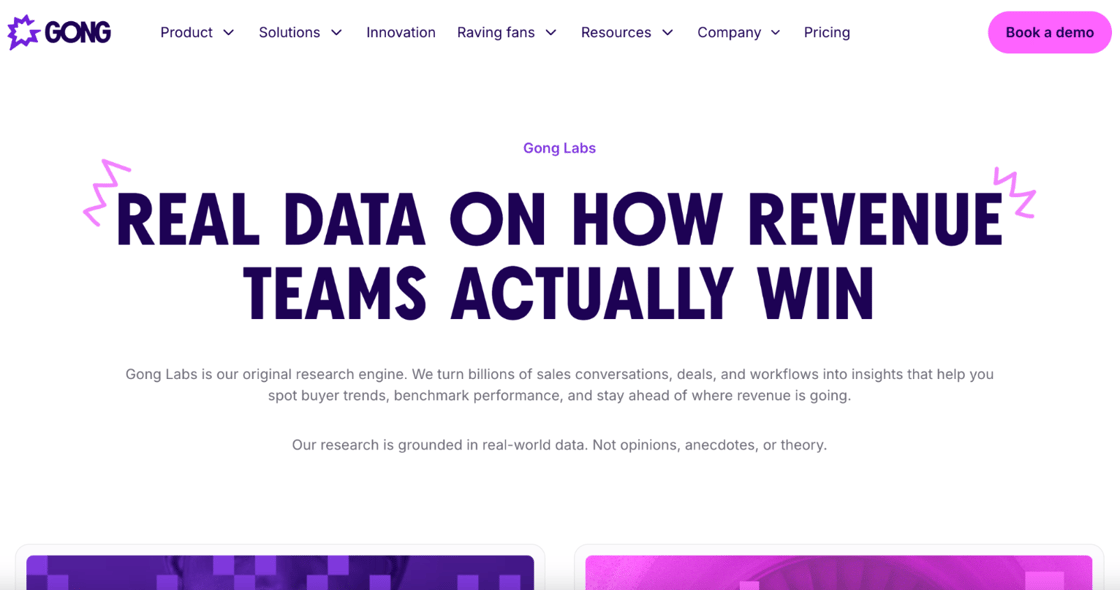
The company records and analyzes millions of sales conversations.
Its content team does not merely write opinion pieces about sales methodology. It publishes data, featuring findings extracted from a dataset no competitor can access.
The structural advantage is information asymmetry: proprietary data that enables research competitors cannot easily reproduce. That research can earn attention, citations, and trust, attracting more customers and conversations. If those new conversations expand the underlying dataset, the advantage becomes self-reinforcing: more data produces better research, which attracts more customers, which produces more data.
HubSpot
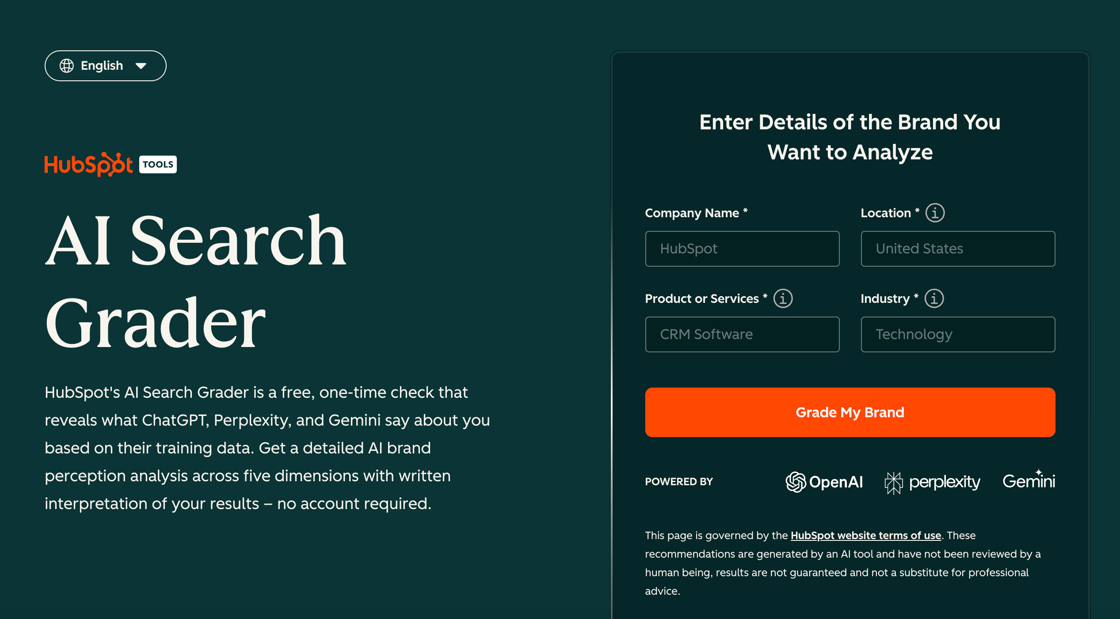
The free CRM, the Academy, the certifications, the free tools like Website Grader and now AI Search Grader. Powerful inbound gravitational pull.. Every piece of content HubSpot publishes enters a distribution environment shaped by millions of users who already know the brand, already use the product, already trust the source. The input advantage is the audience and the brand infrastructure. A blog post from HubSpot and an identical blog post from an unknown competitor are not competing on equal terms, and no amount of on-page optimization can close that gap.
CXL
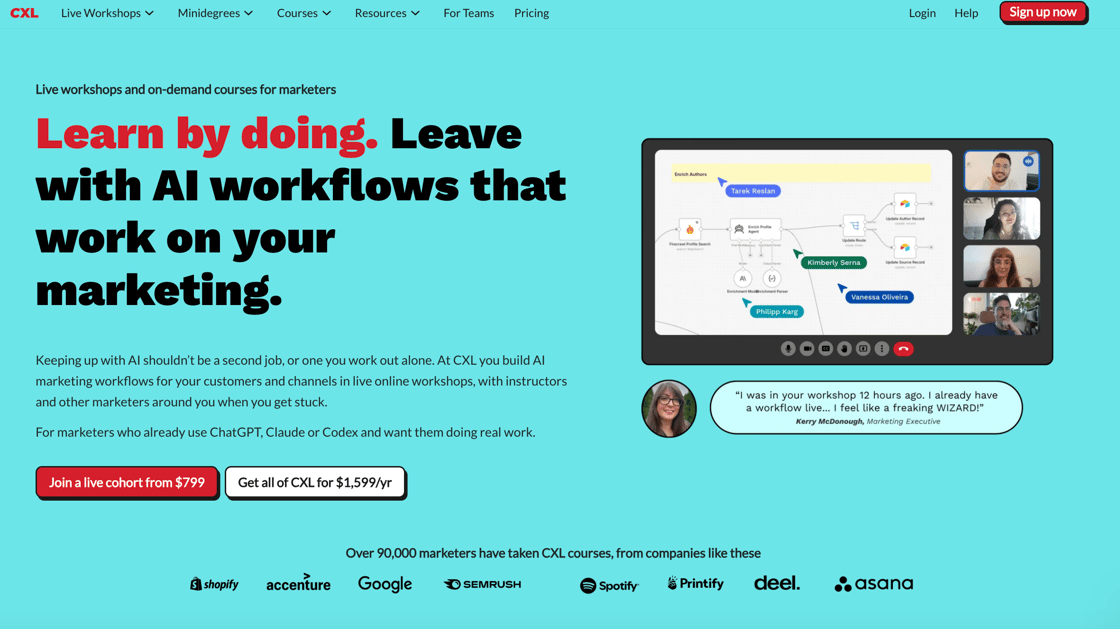
CXL established themselves first as the go-to center of the universe for experimentation and conversion rate optimization. Then, they expanded to be the home of technical marketers who link rolling up their sleeves and tinkering, learning new things. They focused on the advanced lessons, the mastery-driven, not the 101 stuff.
It translated to AEO success down the line, because they had already established this mental position with their audience and had so much content and proof to back it up. Quote from Stefan Maritz that I use often:
“We didn’t hack anything. We are not even the biggest online education platform out there. People just kept mentioning us because we’ve been putting out valuable content for years.
When someone asks about CRO, growth or B2B marketing our name comes up because the training data is filled with people recommending us and telling other people on the internet why we are better than Udemy and worth the investment. If people don’t recommend you, no model will either.”
Playing a Different Game
W. Brian Arthur’s work on increasing returns described a world where the old economic intuition that advantages naturally erode, that markets tend toward equilibrium, that early leads are temporary did not hold.
In technology markets, advantages often compound. Early traction attracts more users, more data, more network effects, which attract more traction. The winner pulls away.
The same dynamic applies to organic growth, when the program is built on the right foundation.
The best organic programs are built by identifying an advantage, a raison d’etre if you will, sometimes a small one, sometimes an obvious one nobody has bothered to exploit, that compounds until the inches are irrelevant.
The question for any program is not “how do we move from position seven to position four.” It is “what do we have, or what can we build, that compounds?”
Want more insights like this? Subscribe to Field Notes