Most businesses lose inbound leads without noticing. A prospect fills out a demo form at 7 p.m. They call your sales line while every rep is on another call. Or they open the chat on your pricing page during a team meeting. By the next morning, that buyer has booked a call with a competitor who answered first. AI agents for inbound leads exist to close exactly that gap.
The problem is getting sharper, too. More buyers now arrive as cold inbound: they ask an AI assistant for a shortlist, then submit contact forms to every vendor on it at once. When five companies get the same form fill, the first useful reply often wins the deal.
Why speed to lead still decides inbound deals
The research on lead response has been consistent for more than a decade. In a Harvard Business Review study that audited 2,241 US companies, the average response time to a web lead was 42 hours. Nearly a quarter of the companies (23%) never responded at all.
The same study found that firms that tried to reach a lead within an hour were nearly seven times more likely to qualify it than firms that waited an hour longer. Compared with firms that waited a day or more, they were more than 60 times as likely to qualify the lead.
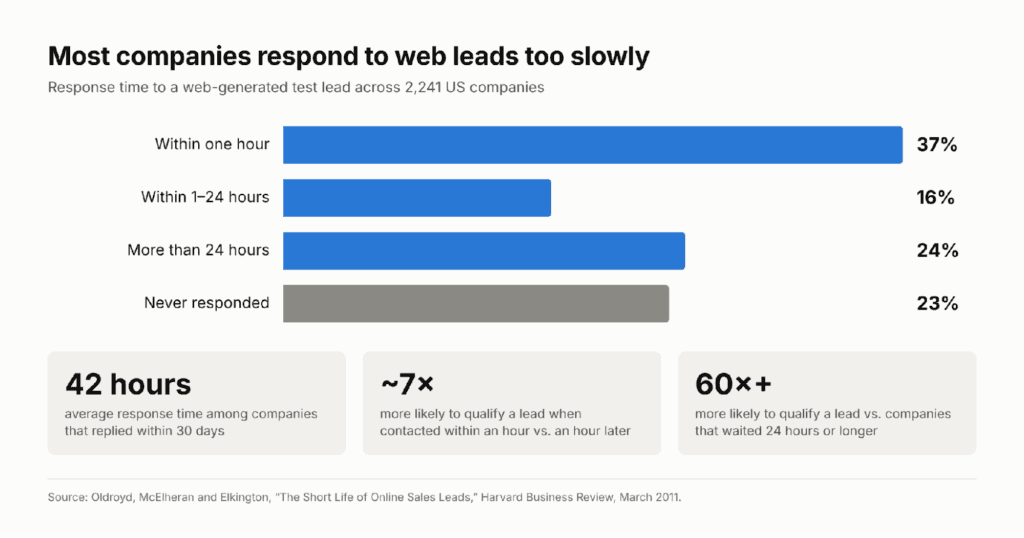
AI agents tackle this gap directly. The best ones answer calls, chats, and form fills in seconds. They ask the questions a good sales development representative (SDR) would ask. They write what they learn back to your customer relationship management (CRM) system and pass warm leads to a person at the right moment.
The six tools below don’t all solve the same part of the problem, though. Some are strongest on the phone, others on your website or in the inbox. We’ve grouped what each one does best, where it falls short, and what to check before you buy. If you’re rethinking your wider B2B lead generation strategy, use this list to decide where automation should sit in it.
How we evaluated these AI agents
We looked at each tool through one question. Does it help a team reach, qualify, and convert more of the inbound leads it already pays to generate? That broke down into six practical criteria:
- Speed to first response: How quickly the agent engages a new lead, measured in seconds rather than hours.
- Channel coverage: Whether it handles phone calls, website chat, email, SMS, or messaging apps, and how many at once.
- Qualification depth: Whether it asks real qualifying questions and adapts to the answers, or simply collects contact details.
- CRM integration: Whether lead data, transcripts, and outcomes are written back to the CRM automatically and accurately.
- Human handoff: How cleanly a conversation moves to a rep, and whether the rep gets the full context.
- Security, compliance, and deployment effort: How the vendor protects data, and how much work it takes to go live.
The tools are listed by the inbound channel they’re built around, starting with the phone and moving to the website and the inbox. The order isn’t a ranking. The right pick depends on where your leads come from.
Quick comparison
| AI agent | Best for | Main inbound channels | CRM fit |
|---|---|---|---|
| Natterbox | Salesforce-first teams that capture leads by phone | Voice, SMS, WhatsApp, chat, video | Native to Salesforce |
| Qualified (Piper) | Salesforce teams converting website visitors | Website chat, voice, video, email | Built on the Salesforce Platform |
| 11x (Julian) | Calling back form fills within seconds | Phone, chat, SMS, WhatsApp | CRM integration on all plans |
| Chili Piper | Turning form fills into booked meetings | Web forms, scheduling, AI chat | Salesforce and HubSpot |
| Warmly | Engaging anonymous website visitors | Website chat, popups, live video | HubSpot and Salesforce |
| Conversica | Persistent follow-up on quiet leads | Email, SMS, chat | CRM and marketing automation integrations |
The six best AI agents for capturing and converting inbound leads
1. Natterbox: best for Salesforce-first teams that capture leads by phone
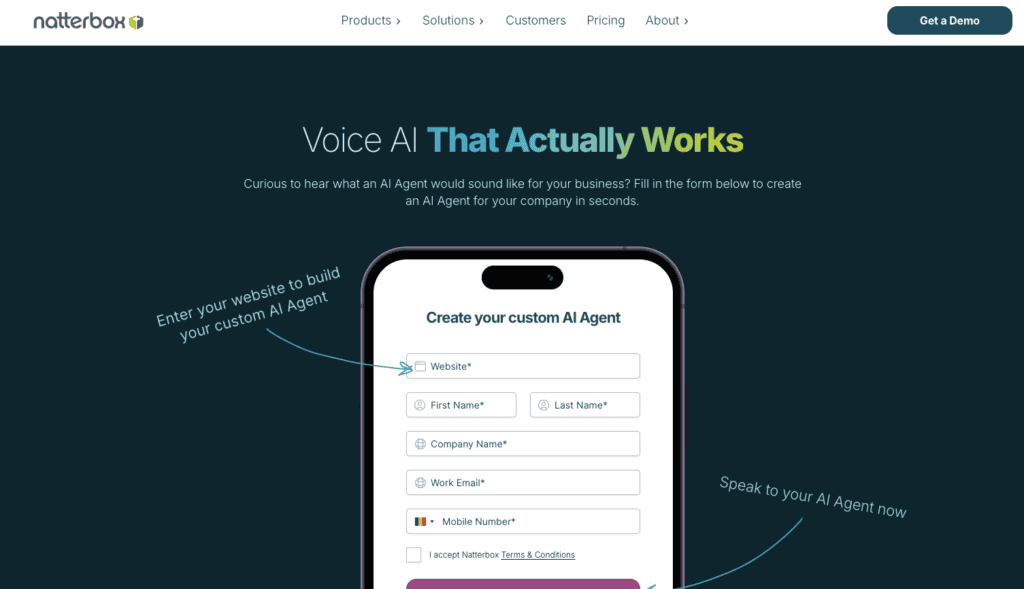
Natterbox is AI contact center software built for companies that run on Salesforce. Its AI agents sit inside the telephony layer rather than on top of a separate phone system. When a prospect calls, the agent picks up straight away, works out what they need, and pulls data from Salesforce in real time. It then either resolves the request or passes the call to a person.
For inbound sales, an unanswered call is usually a lost lead. Property buyer We Buy Any Home used Natterbox AI agents to triage and route more than 1,000 missed calls a month. In its first 30 days, the AI handled over 650 calls and resolved 81% without a human. Tool wholesaler Sutton Tools reports that 77% of its calls were handled end to end by AI.
Natterbox’s own team builds and tests the AI flows inside your CRM, using your objects and logic. For calls that do reach a rep, Natterbox call coaching software transcribes and scores each conversation and flags coachable moments, so sales managers can spot where reps are losing inbound leads.
Key features
- Native Salesforce architecture, so call data, transcripts, and AI outcomes land on the right records
- Voice plus digital channels, including SMS, WhatsApp, chat, and video
- Human-in-the-loop handoff, with full context passed to the rep
- Compliance tooling such as call recording and payments that meet the Payment Card Industry (PCI) standard
Best for: Salesforce-first sales and service teams where the phone is a major inbound channel, in sectors such as retail, financial services, healthcare, and recruitment.
What we like
- Answers every inbound call instantly, including after hours and during volume spikes
- Writes lead details and call outcomes to Salesforce without middleware
- Removes the need for in-house AI engineers, since the vendor handles the build
Where it falls short
- Built around Salesforce, so teams on another CRM won’t get the full benefit
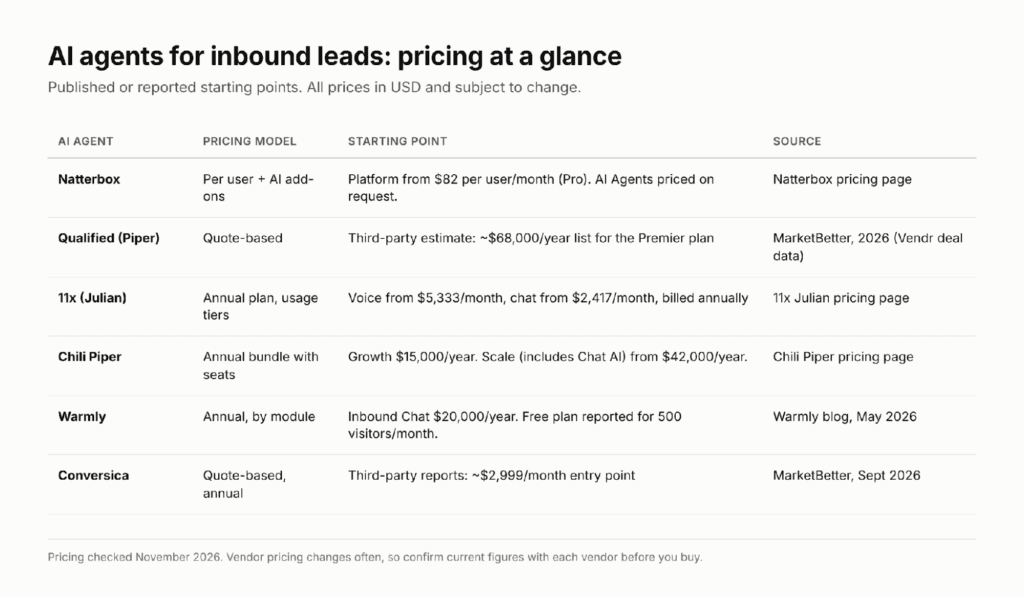
- Platform seats start at $82 per user per month on the Pro plan, but AI agents are priced as add-ons on request, so total cost isn’t clear up front
- Focused on calls and messaging, so website visitor engagement and instant form callbacks need another tool
2. Qualified (Piper): best for Salesforce teams converting website visitors
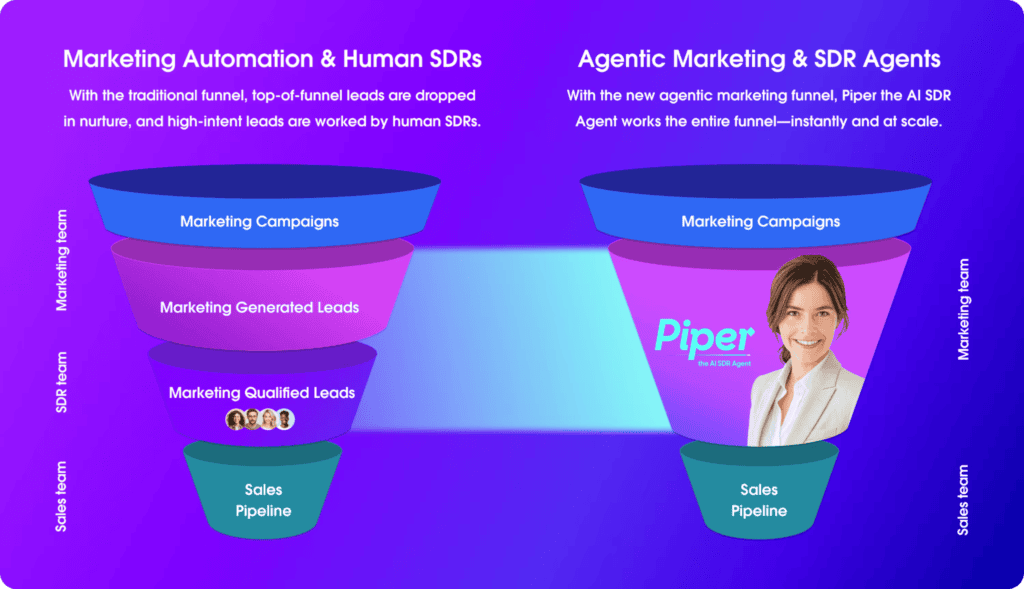
Qualified built its platform around Piper, an AI SDR agent that engages buyers on your website and in their inbox. Piper greets visitors with a personalized message based on Salesforce data such as leads, accounts, and open opportunities. It answers questions over chat, voice, or video and books meetings directly on the right rep’s calendar.
The company was founded by former Salesforce executives and is built natively on the Salesforce Platform. Salesforce announced its acquisition of Qualified in December 2025 and closed the deal on April 1, 2026. Its capabilities are being folded into Agentforce Sales and Agentforce Marketing.
Key features
- Real-time website conversations over chat, voice, and video
- Email follow-up that nurtures leads who aren’t ready to talk yet
- Identifies unknown visitors, checks them against your ideal customer profile (ICP), and creates new Salesforce leads
- Routes buyers with open opportunities straight to their account owner
Best for: B2B marketing and demand generation teams on Salesforce with meaningful website traffic.
What we like
- Uses Salesforce data natively to personalize each conversation
- Covers both the website and the inbox, so leads keep their context across channels
- Acts on buyer intent signals such as pages viewed and account status
Where it falls short
- Pricing isn’t published, and third-party estimates put the Premier plan at around $68,000 a year at list price
- Focused on website and email engagement rather than answering inbound phone calls
- The product roadmap now sits inside Salesforce, so teams outside that ecosystem have fewer reasons to choose it
3. 11x (Julian): best for calling back form fills within seconds
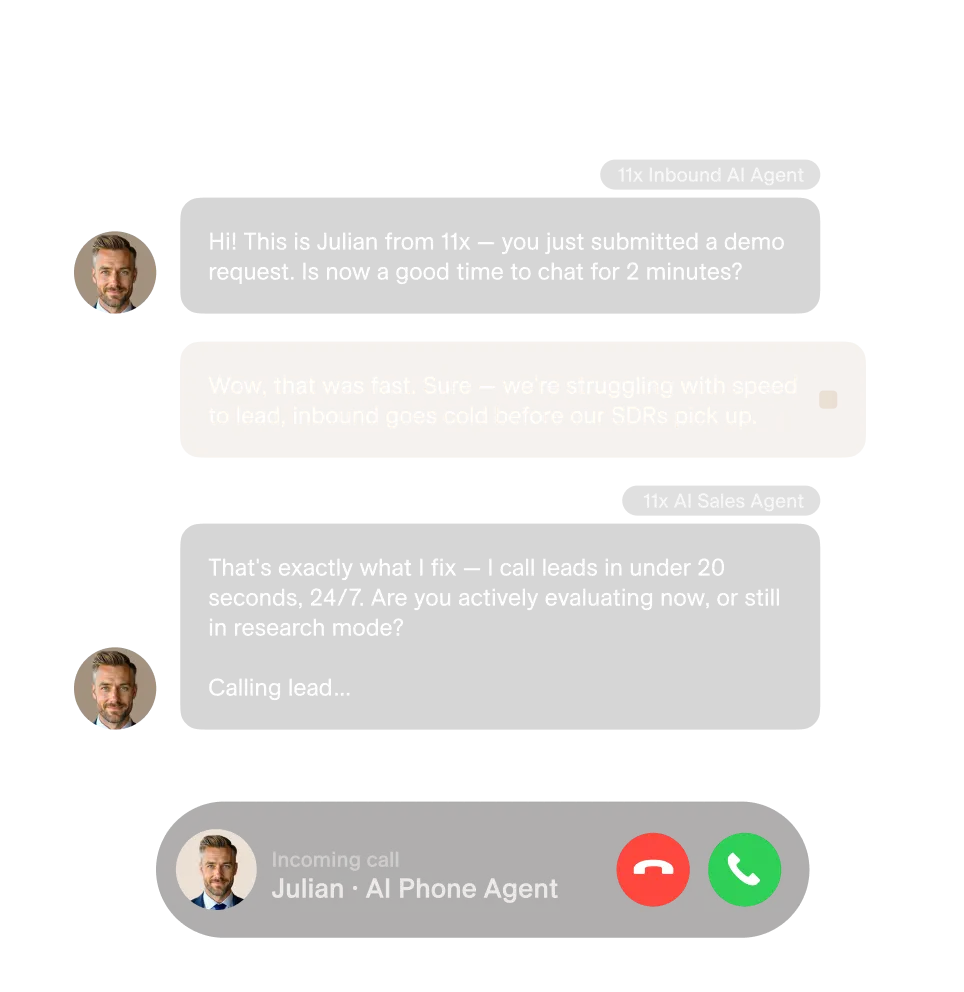
Julian is 11x’s inbound AI agent, built around speed to lead. When a prospect submits a form, Julian calls them back within seconds. It uses the details they just entered to personalize the call. Then it asks your qualifying questions, handles objections, and either books a meeting or transfers the call live to a rep.
Julian also works across chat, SMS, and WhatsApp. Every call is recorded, transcribed, and summarized, so reps can review what happened before they pick up a transferred lead.
Key features
- Instant callbacks on new form submissions
- Qualification against criteria you define, with live transfer and full context
- Branded caller ID and phone number monitoring to protect pickup rates
- Multichannel follow-up across phone, chat, SMS, and WhatsApp
Best for: B2B sales teams with high form-fill volume who want every lead called while interest is still high.
What we like
- Built specifically for inbound speed to lead
- Full transparency through call recordings, transcripts, and summaries
- No setup or onboarding fees on any plan
Where it falls short
- Entry pricing is high for smaller teams, with voice plans starting at $5,333 per month, billed annually
- Annual contracts are the default, so there’s no low-risk monthly trial
- Designed for sales qualification, so service calls still need a separate system
4. Chili Piper: best for turning form fills into booked meetings
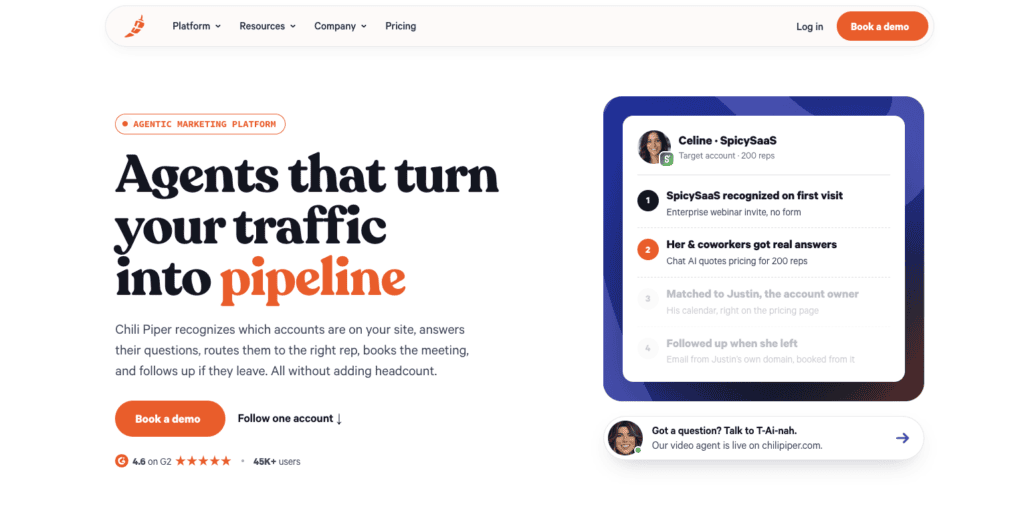
Chili Piper made its name with instant scheduling. When a qualified lead submits a form, they see a calendar and can book with the right rep before leaving the page. The platform has since added Chat AI, which answers visitor questions, qualifies leads, and books meetings around the clock.
Its routing engine is one of the most detailed in the category. It supports lead-to-account matching, round-robin and territory rules, and routing for any standard or custom Salesforce object. Chili Piper reports that Gong saw a 70% lift in form conversion after rolling it out.
Key features
- Form Concierge for qualifying, routing, and booking from any web form
- Lead distribution and Salesforce routing rules
- Chat AI for 24/7 website engagement
- Handoff scheduling between SDRs and account executives
Best for: Teams with a revenue operations (RevOps) function whose pipeline depends on demo requests.
What we like
- Removes the delay between a form fill and a booked meeting
- Handles complex territories and account ownership with deep routing logic
- Publishes its pricing, with the Growth plan at $15,000 a year
Where it falls short
- Chat AI is only included on the Scale plan and above, which starts at $42,000 a year
- Doesn’t answer inbound phone calls
- Routing rules need a clear owner, usually someone in RevOps
5. Warmly: best for engaging anonymous website visitors
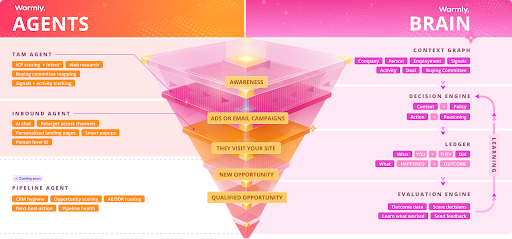
Most website visitors never fill out a form, and Warmly is built for that group. It identifies visitors at the company level and, in many cases, the individual level. Its inbound agent then opens an AI chat that already knows their CRM history and the pages they’ve viewed. When a conversation needs a human, a rep can step in over live video.
Visitors who leave without converting can be picked up by Warmly’s outbound agent through email and LinkedIn. HubSpot acquired Warmly in July 2026 and plans to build its technology into the HubSpot platform.
Key features
- Website visitor identification at company and person level
- AI chat, smart popups, and personalized landing pages
- Live video handoff to reps
- Two-way sync with HubSpot and Salesforce
Best for: Mid-market B2B SaaS teams with steady website traffic and a low form-conversion rate.
What we like
- Turns anonymous traffic into named, actionable leads
- Opens chats with context instead of a generic greeting, a core tactic in AI conversion rate optimization
- A free plan for 500 visitors a month, so you can test identification before you buy
Where it falls short
- Paid inbound chat starts at $20,000 a year, with no monthly billing
- Person-level identification is strongest for US traffic, so teams selling into Europe should review privacy rules first
- Salesforce users should confirm the integration roadmap now that HubSpot owns the product
6. Conversica: best for persistent follow-up on quiet leads
Conversica has worked on AI lead follow-up since 2007. Its AI assistants hold two-way conversations over email, SMS, and chat in multiple languages. They confirm interest, validate fit, and hand qualified contacts to sales. The full conversation history is logged in your system of record.
Its biggest strength is persistence. Each assistant reaches out several times with varied messaging. If a lead doesn’t respond, it switches to a different conversation. That makes it useful for event follow-up and for reactivating older leads in your database.
Key features
- Two-way AI conversations across email, SMS, and chat
- A library of prebuilt, customizable conversations
- Automatic handoff to reps with alerts and interaction history
- Integrations with CRM, marketing automation, and customer success platforms
Best for: Teams with large lead databases and longer sales cycles.
What we like
- Follows up on every lead, not just the ones reps prioritize
- Nurtures and reactivates leads over weeks rather than minutes
- A long track record in AI-driven lead follow-up
Where it falls short
- Doesn’t answer inbound phone calls
- Conversica pricing is quote-based, and third-party reports put the entry point near $3,000 a month on an annual contract
- Built for follow-up rather than instant first response, so it works best alongside a faster front-line tool
What to look for in AI agents for inbound leads
Response time on the lead’s own channel
An agent that emails someone two minutes after they called your sales line hasn’t solved the problem. Look for an agent that responds in seconds on the channel the lead chose, whether that’s a phone call, a chat window, or a form.
Coverage of every inbound entry point
Leads rarely arrive through one door. Before you shortlist tools, map your customer journey touchpoints and count where inbound interest comes from. Many B2B teams invest heavily in website chat while their phone lines still go to voicemail after 5 p.m. Those calls often carry the highest-intent buyers.
CRM write-back, not just a sync
The agent should create or update the lead record, log the transcript and qualification answers, and trigger your existing routing rules. Pair it with lead enrichment so reps see firmographic context next to the conversation. If reps have to copy details between systems, the speed you gained at first response disappears at the handoff.
A handoff that carries context
No AI agent closes every deal on its own. When a conversation needs a person, the rep should see who the buyer is, what was already discussed, and why the lead was routed to them. The buyer should never have to repeat themselves.
Security, compliance, and reliability
Inbound conversations often include personal and sometimes payment data. Check how each vendor handles call recording, data residency, the General Data Protection Regulation (GDPR), and certifications such as System and Organization Controls 2 (SOC 2). Ask how the platform performs under peak load, too. An agent that drops calls on your busiest day costs more than it saves.
Deployment effort and pricing model
Some tools go live in an afternoon. Others involve a project with routing rules, CRM mapping, and testing. Ask who does the build and how long it takes. Then check whether pricing is per seat, per conversation, or per outcome, because that changes your cost as volume grows.
Common mistakes to avoid
- Automating before fixing routing. An agent that qualifies leads perfectly and then sends them to the wrong rep only moves the bottleneck.
- Ignoring the phone. Voice leads tend to be the most ready to buy, and they’re the easiest to lose when nobody picks up.
- Measuring conversations instead of pipeline. Track meetings booked, qualified opportunities, and revenue, not just how many chats the agent handled.
- Hiding the AI. Buyers respond better when the agent is open about what it is and offers a quick path to a person.
- Setting it and forgetting it. Review transcripts every week in the first month. Tune the qualification questions based on what real leads say.
Which AI agent fits your inbound motion?
- Your best leads call you, and you run on Salesforce: Natterbox answers calls instantly and writes outcomes to Salesforce.
- Your website drives pipeline, and you’re on Salesforce: Qualified’s Piper is built for website and email conversion.
- You get lots of form fills and want each one called back: 11x’s Julian is built for that callback model.
- Your pipeline runs on demo requests: Chili Piper turns form fills into booked meetings.
- Most visitors never fill out a form: Warmly identifies and engages them while they’re still on the site.
- You have a large database of leads that went quiet: Conversica keeps following up until they respond.
Many teams end up combining two of these, typically one tool for the phone and one for the website. AI agents also sit on top of the rest of your stack, so it’s worth reviewing your lead generation tools before you add another layer. If you’re weighing AI for the rest of your go-to-market stack, our comparison of AI agents for marketing operations covers platforms for campaigns, reporting, and workflow automation.
Want to know where your inbound leads really come from? Omniscient Digital’s B2B buyer behavior report shows where buyers start their research, how they move between channels, and what tips the final decision. Download it free, or talk to our team about building an organic growth engine that fills your pipeline with buyers worth answering fast.
Frequently asked questions
What is an AI agent for inbound leads?
It’s software that engages new leads on its own. It answers calls, replies in chat, or follows up on form fills. Then it asks qualifying questions, records the answers in your CRM, and either books a meeting or hands the lead to a person. Unlike a scripted chatbot, it adapts to what the lead says and can take actions in your systems.
How fast should you respond to an inbound lead?
As fast as you realistically can, ideally within minutes. Research on lead response shows that the chance of reaching and qualifying a lead drops sharply after the first hour. That’s why speed to lead is the main job most teams hand to AI agents.
Can AI agents replace SDRs?
AI agents can take on much of the volume for first response, routine qualification, and scheduling. Complex deals, negotiations, and relationship building still need people. Most teams use AI agents to make sure every lead gets an immediate answer, so reps can spend their time on the conversations most likely to close.
Do AI agents work for phone leads as well as web leads?
Yes, but not every tool covers both. Platforms such as Natterbox and 11x answer or place calls. Tools like Qualified, Chili Piper, and Warmly focus on the website, and Conversica focuses on email, SMS, and chat follow-up. Check which channels your leads use before you decide.
Final thoughts
Speed still wins inbound deals, and AI agents finally make it realistic to answer every lead in seconds, whatever time it arrives. The right choice depends on where your buyers come from. Phone-heavy teams should start with an agent that answers calls. Website-heavy teams should look at tools that engage visitors and convert form fills. Teams sitting on a large, quiet database should prioritize persistent follow-up.
Start with the channel where you’re losing the most leads today. Measure the pipeline it creates, not the conversations it handles. Then expand from there.