A strong product. Happy customers. A website your team has A/B tested into submission.
Still, SEO reputation management can cost you the deal before the sales team sees the warning sign.
Here’s the B2B version I keep seeing: a buyer is ready to sign, googles the brand, and finds a stale complaint, a brutal comparison page, or a messy social media thread. Then the opportunity goes quiet. No objection to handle. Just a CRM note that never moves.
That risk is growing because buyers now self-educate more than ever. Consider this: 67% of B2B buyers prefer a rep-free experience and often complete 2/3 of the journey before engaging sales.
Your online presence is already selling, defending, or leaking trust.
This guide breaks down the online reputation management strategy behind cleaner page-one results: what to audit, what to suppress, which assets to build, and the tips that turn reputation management into a real business workflow.
What is SEO reputation management?
SEO reputation management is the process of making search results around your brand accurate, credible, and harder to hijack by one angry review, dated article, or Reddit thread.
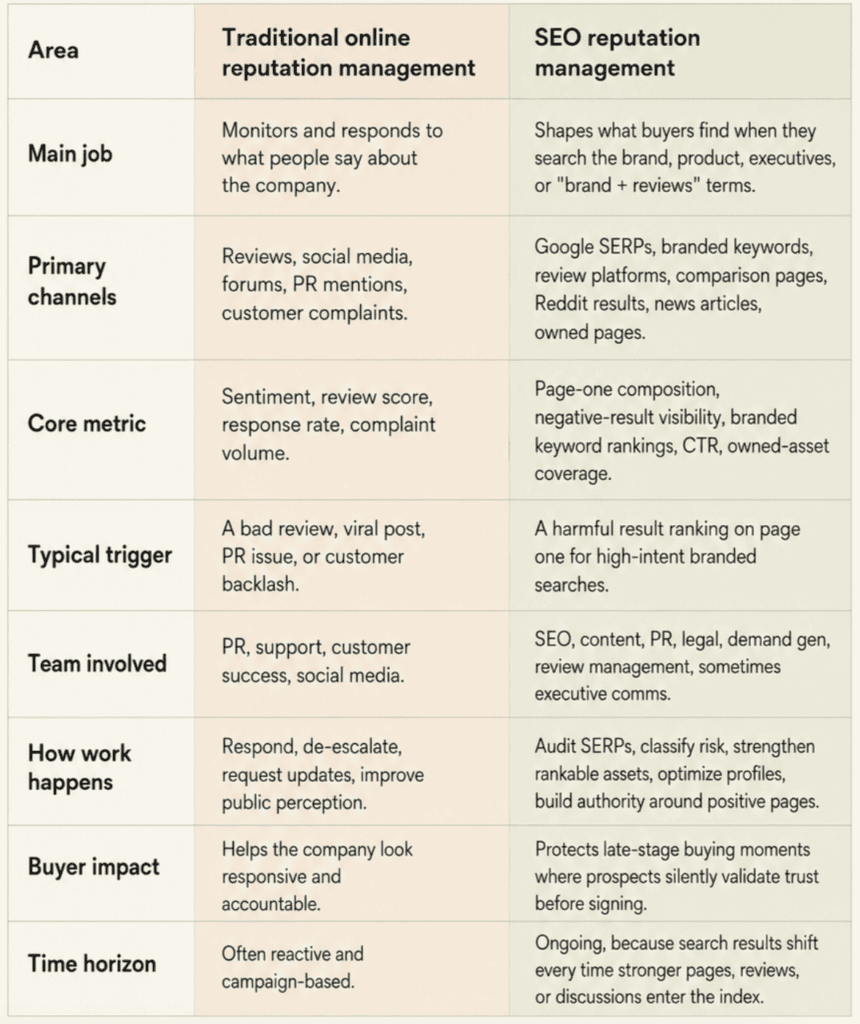
Traditional reputation management watches what customers say about your brand. SEO-led work changes the page-one evidence a buyer actually sees. That means auditing branded SERPs (search engine results page), mapping negative assets by intent, building stronger owned and third-party pages, and tracking rankings as a business risk.
For a B2B business, the job is to make the search engine version of the brand accurate, current, and easy to verify. Your online presence should connect buyers to proof, not leave them piecing the story together from scattered results.
So don’t mix them up:
Why is SEO reputation management important?
SEO reputation management matters when page one becomes the buyer’s risk check.
In practice, this risk shows up in the details buyers notice fast: a thin review profile, an outdated brand description, a low-authority directory page outranking your own content, or a SERP snippet that makes the business look smaller than it is.
That is where your online presence starts carrying brand credibility before the website, sales deck, or demo can explain the context.
Google search results shape how customers perceive your brand
In a branded SERP audit, companies check what a buyer will trust first: owned content, third-party reviews, comparison pages, and the Google Business Profile.
Google frames SEO as helping users find a site and decide whether to visit; G2’s 2025 buyer research shows enterprise buyers rely heavily on software review sites during vendor research.
That is why online reputation management has to protect the brand inside the actual search results, not just around them.
Online reviews directly influence buying decisions
Your customer reviews do more than support the brand story. They show up beside competitors, influence shortlist confidence, and shape what potential customers believe before they contact sales.
Enterprise buyers use review sites as a top research source, with 56% naming them during product research. 41% of local search consumers always read reviews when browsing for businesses.
That makes online reviews, Google reviews, and your broader online presence part of the same local SEO and reputation workflow, not a separate “nice to monitor” channel.
A strong online presence protects against negative content
The first Google results page is where buyers build the first working version of your brand story. Result #1 earns 28.5% CTR (click-through rate), while #10 gets 2.5%. That gap is the reason to build more useful owned pages, review profiles, partner mentions, and a verified Google Business Profile.
Google lets verified businesses manage how they appear on Search and Maps, so your business can give buyers more credible assets to click before weaker narratives fill the search results.
Reputation signals affect SEO rankings and visibility
Buyers can judge the brand while they are still browsing Google results, before they even click through. With 68.01% of Google searches ending without a click, the visible search results often do the first trust job.
Strong-owned pages, review profiles, structured snippets, and a verified Google Business Profile give the business more proof surfaces before anyone reaches the site.
Social media conversations drive trust and customer loyalty
Social threads are searchable trust data now. 50% of consumers hear about a brand crisis first on social, and 84% say response speed affects later perception.
For B2B teams, online reputation management has to cover social media platforms where potential customers compare trust and credibility with competitors before sales add context.
5 key elements of SEO reputation management
SEO reputation management works when your team treats the SERP like a managed asset, not a mood board. For B2B marketers, the five control points are simple:
- what ranks
- who owns the narrative
- how reviews support the brand
- content that earns trust
- and where reputation work plugs into the wider SEO strategy behind stronger search rankings.
Branded search visibility and Google SERP control
Branded search visibility is the part of online reputation you can actually measure: which assets show up when buyers search your brand, product, executives, or comparison keywords.
In strong SERPs, the business owns the context through current pages, review profiles, partner mentions, and credible third-party results. When those rankings are weak, buyers fill the gaps themselves.
Content creation that shapes your online reputation
In online reputation management, strong website content answers the questions buyers search for to verify a brand: review intent, alternatives, pricing, product claims, use cases, founder or executive expertise, and customer outcomes.
Managing that library well hinges on the difference between content management vs knowledge management. One keeps the brand’s assets organized and findable; the other keeps the answers buyers rely on accurate and current so verification pages don’t drift out of date.
When those pages match the right keywords and earn rankings, Google has clearer evidence to show. Buyers get fewer information gaps, and trust builds before the sales call.
Social media signals and reputation
Social media shapes reputation in the messy middle, where buyers check if the polished content matches the public conversation.
A quiet LinkedIn thread, founder post, Reddit mention, or comment under reviews can change how the brand feels before anyone reaches the website. Reddit usage statistics show just how much daily conversation happens on the platform, which is exactly why a single thread can carry so much weight in shaping buyer perception.
For SEO-led reputation management, these signals matter because they create searchable context: fresh language, repeated objections, or customer phrasing.
Review management across platforms
Review management turns customer feedback into visible search proof.
Google says that review count and review score factor into local search rankings. That makes fresh, specific, positive reviews on Google, G2, Capterra, and other review sites part of online reputation management.
For any business, the pattern is simple: recent proof makes the brand easier to trust.
Technical SEO factors that support reputation
A strong brand page is useless if Google finds duplicates, slow templates, broken canonicals, thin schema, or buried internal links. That is where search engine reputation management gets operational:
- clean architecture helps priority content rank,
- structured data gives context,
- profile consistency connects the entity across the web.
Same with reviews. Markup, indexable pages, and healthy third-party profiles make proof easier to surface. You cannot optimize reputation signals that search engines struggle to read.
7 steps to effective SEO reputation management
The goal is to see what Google already shows buyers, decide which results help or weaken the brand story, and then build assets that can actually move. The steps below turn reputation work into a practical SEO reputation management strategy: audit, prioritize, publish, optimize, monitor, and repeat.
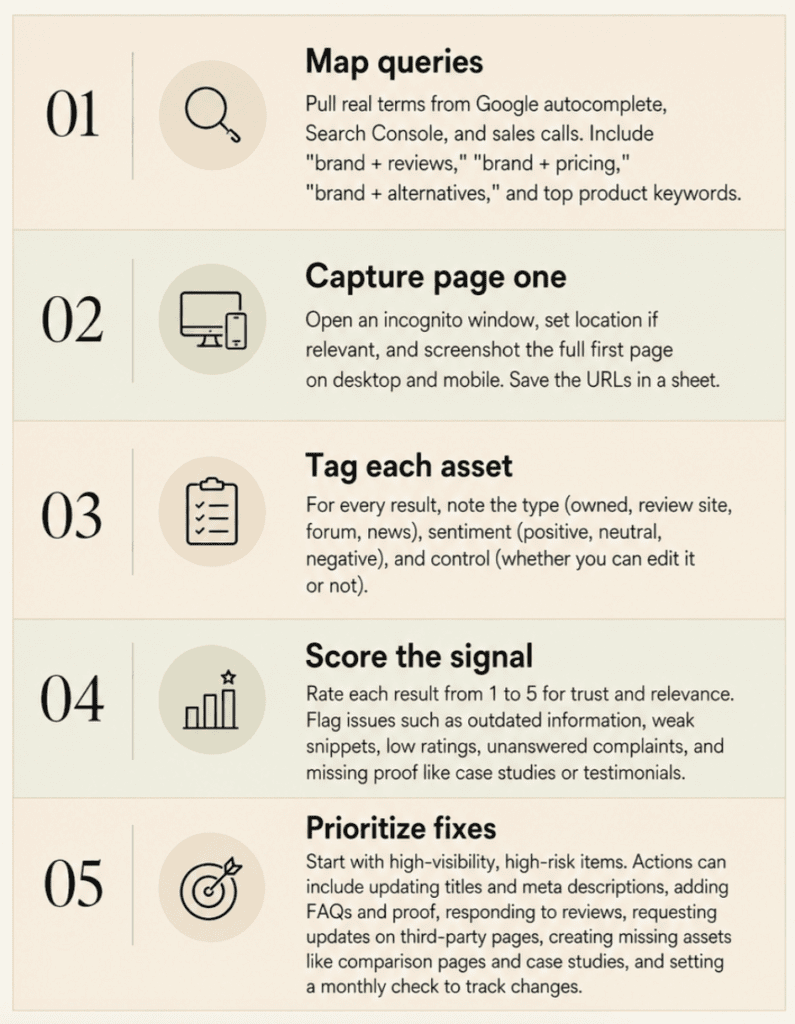
1. Audit your current online reputation
Auditing your current online reputation means checking what buyers actually see before they trust your brand.
- Start with Google autocomplete, branded queries, “brand + reviews,” “brand + alternatives,” executive names, and high-intent product terms.
- Then classify the visible search results: owned pages, third-party profiles, comparison pages, news, forums, and review platforms.
- Look for outdated claims, missing proof, weak snippets, unresolved complaints, and places where positive reviews or customer outcomes should be stronger.
Here are the best tools to monitor brand mentions and reviews
After the audit, monitoring should answer one practical question: what changed since the last review, why did it change, and who owns the next action?
For SEO reputation work, the stack has to connect Google visibility, brand mentions, reviews, and customer feedback back to one business outcome: protecting trust before the buyer talks to sales.
Use tools by signal type:
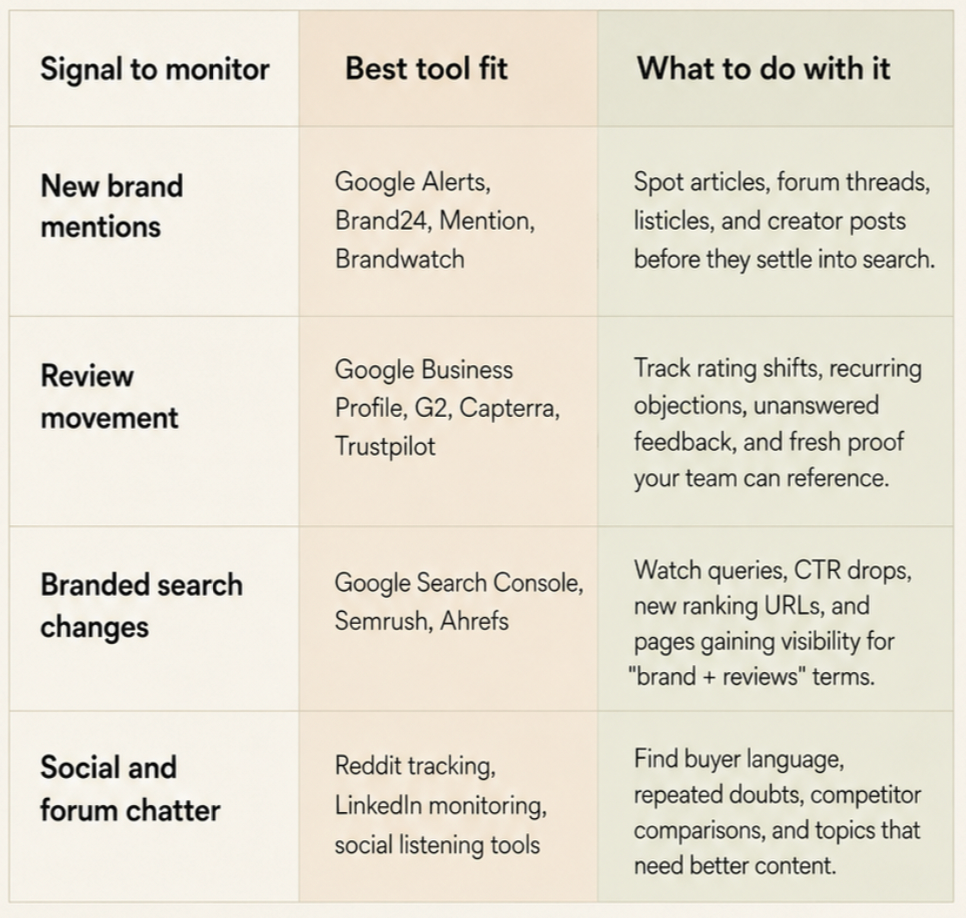
The cleanest setup is ownership-based. SEO manager watches search movement. The customer success team handles replies. PR tracks public narratives. Content turns repeated objections into stronger proof pages for the business.
2. Optimize owned properties for branded search
Owned properties are the pages your team can control, update, and strengthen when branded search gets messy.
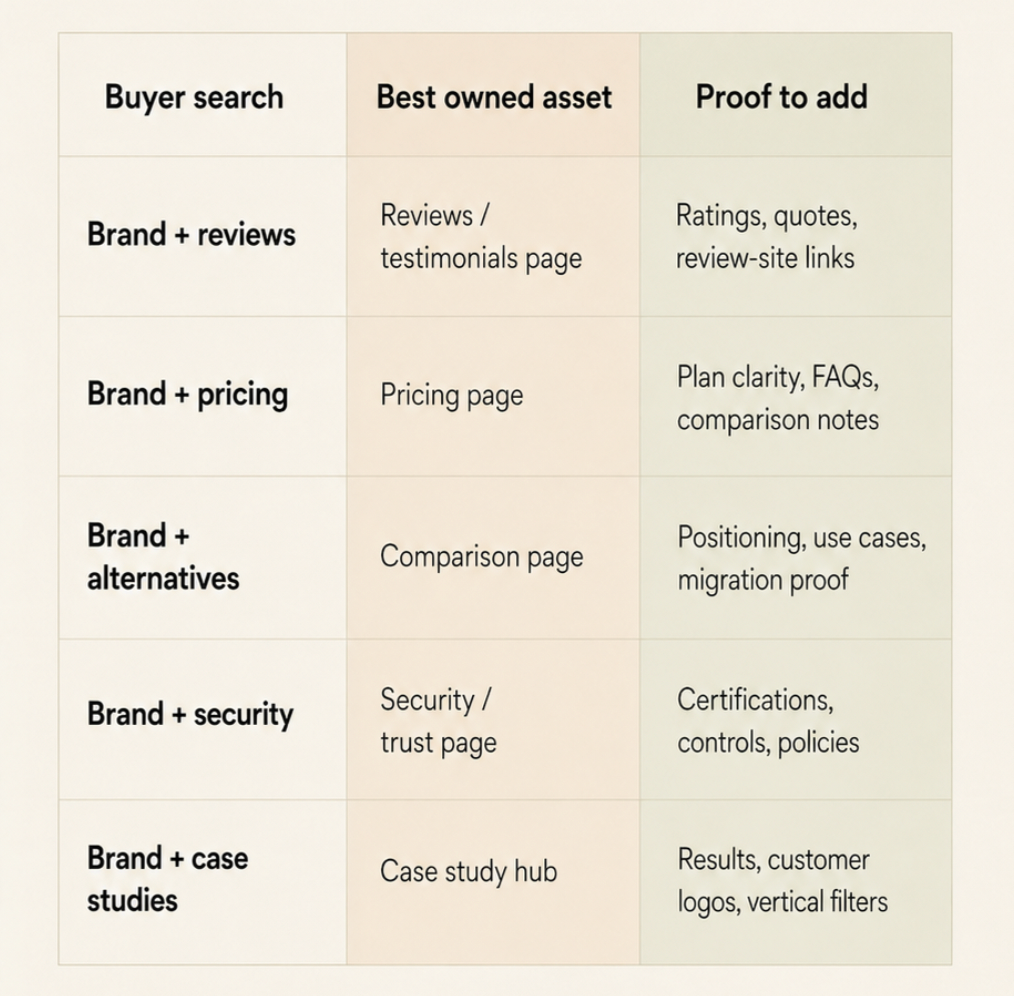
For online reputation management, each page should answer a real buyer concern behind the query: price, risk, proof, security, alternatives, support, or results. Match the title, H1, meta description, internal links, schema, and proof blocks to that intent.
Then check the SERP snippet:
- If the title sounds generic, rewrite it around the buyer’s search.
- If the meta description dodges the concern, add the answer.
Stronger SEO rankings usually start with cleaner pages built around the branded keywords buyers already use to validate the brand.
3. Build a content creation strategy to outrank negative results
When a negative review sits in position two for your brand name, it’s a leak in the bucket where your revenue lives. The top spot grabs 27.6% of clicks, and the top three take 54.4%, while just 0.63% of searchers reach page two.
Give the algorithm more genuinely helpful pages to rank, and it will push the bad result off the page. With 97% of consumers reading reviews before choosing a business, a quality content strategy is how your online reputation stops being one link away from a lost deal.
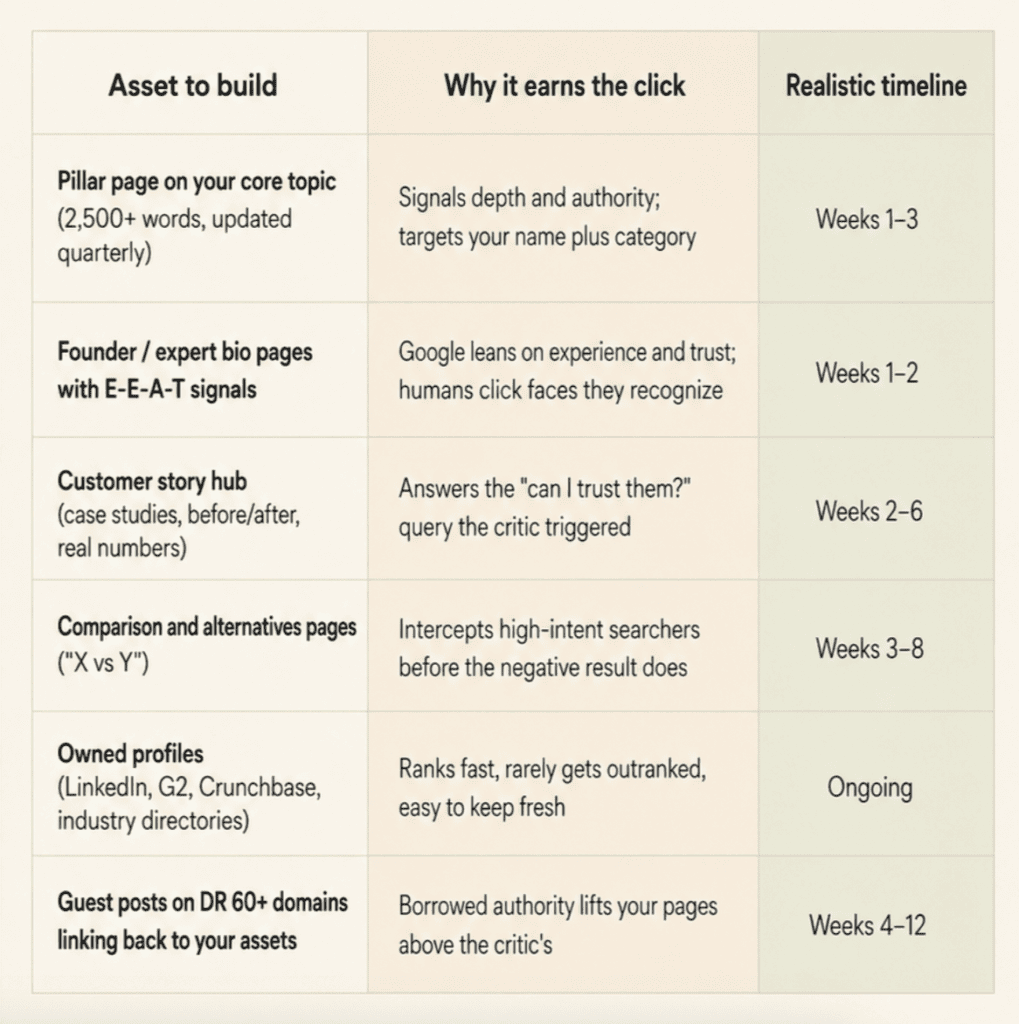
That’s SEO reputation management in practice: publish fresh content, verify your profiles, and pull in positive reviews. Give every customer a reason to add to the record you want found. The playbook is below.
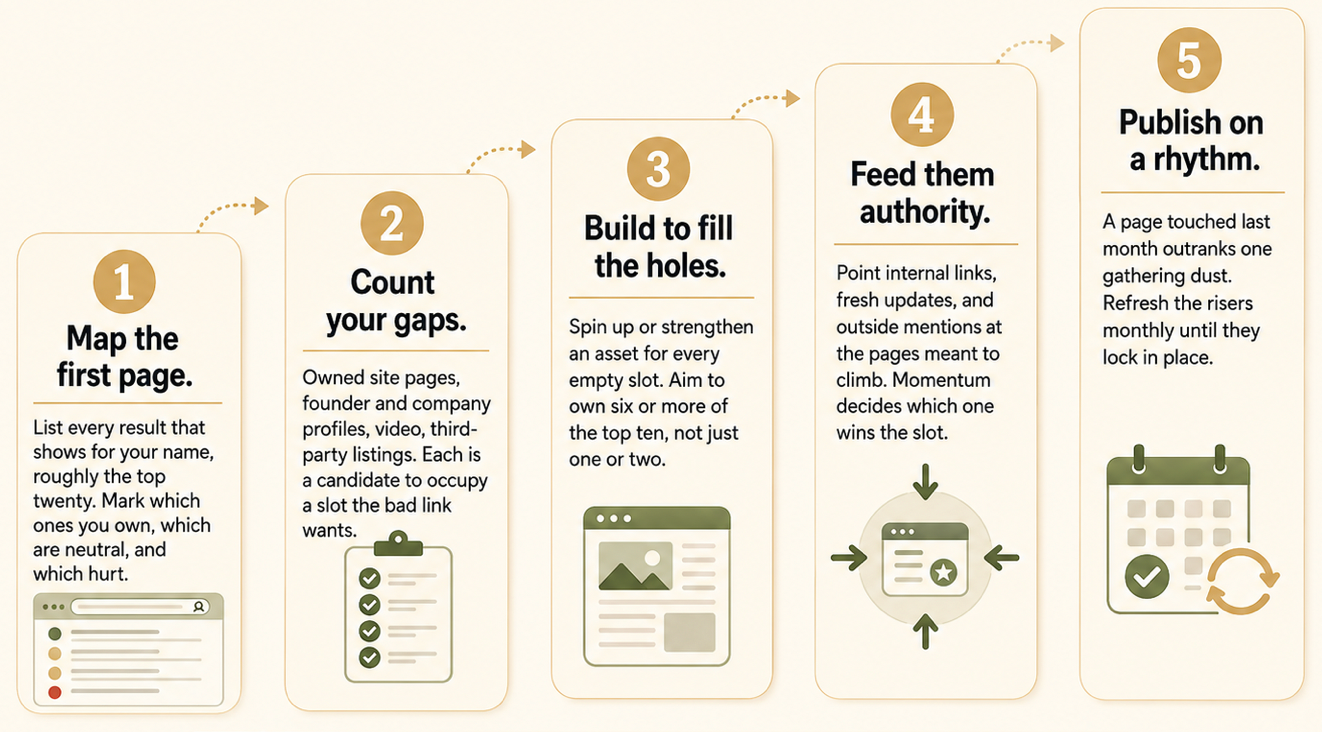
Types of Content That Drive Positive Online Reputation
Four rules for running these cleanups:
- Match the exact query. For “[Company] complaints,” publish a page that honestly addresses concerns instead of pretending they don’t exist.
- Keep it fresh. Recency ranks among the top signals readers weigh, so a page touched last month beats one gathering dust.
- Win the click above the negative result. If a weak review sits at #2, build an owned or earned page strong enough to rank above it. Backlinko found that moving from #2 to #1 can lift relative CTR by 74.5%, so the first result gets the best chance to frame the story.
- Don’t keyword-stuff. Thin, over-optimized pages get filtered, and you’ve paid to teach Google to distrust your domain.
Nine strong results do what no takedown request manages: make the bad one irrelevant.
4. Strengthen your social media presence
You don’t need ten platforms. Pick three or four channels, then optimize each one fully and keep it genuinely active. Your personal brand and company profiles rank fast for a brand search, so this is where you win back page one.
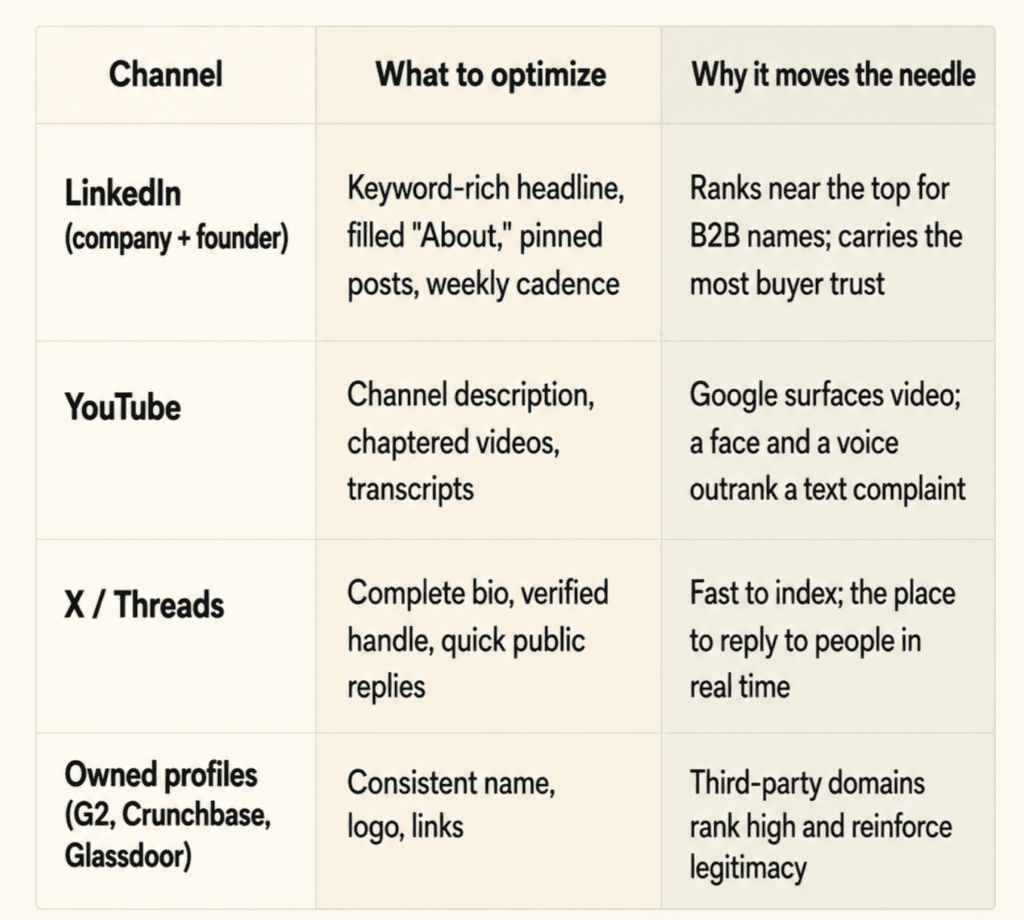
Three habits make it stick: keep every handle identical, post on a rhythm you can sustain, and reply to customer feedback in public fast. A calm answer under a harsh comment wins the silent onlookers, and the channel becomes an asset your business owns.
5. Generate and respond to customer reviews
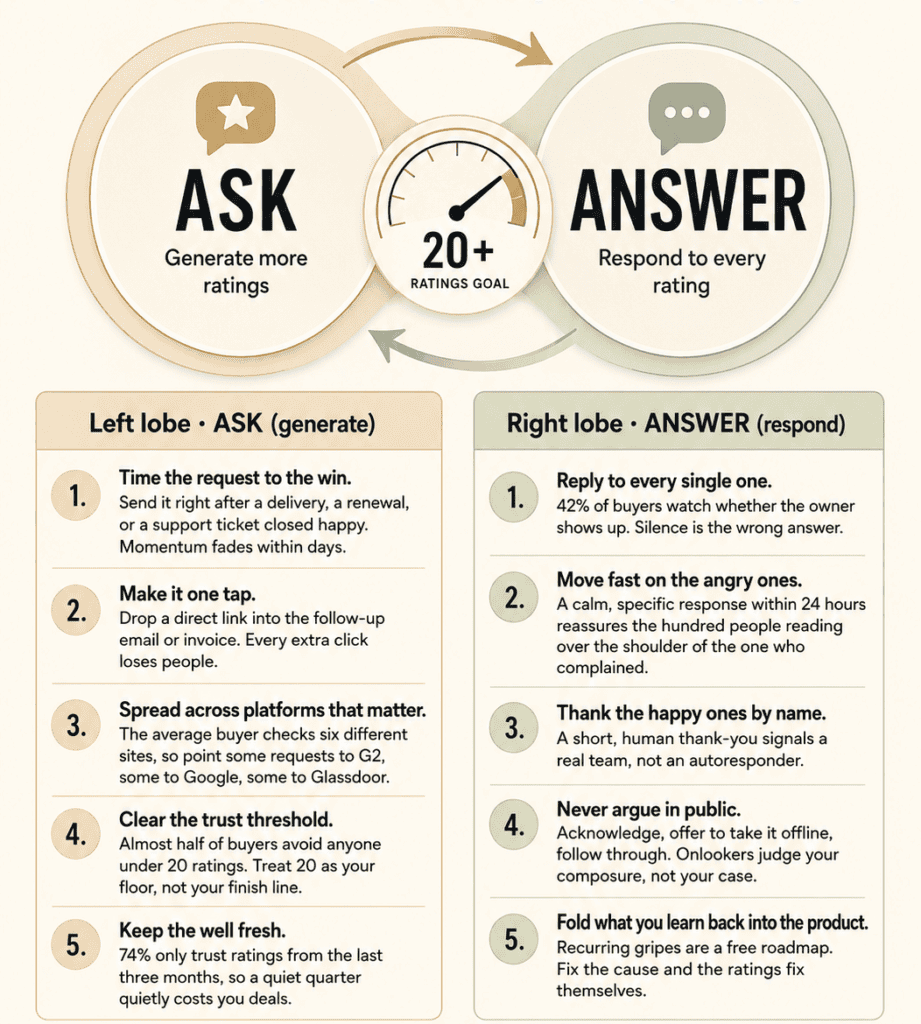
Run two motions and never stop either one: ask for reviews on repeat, then answer every one you get.
- Point review requests to the platforms buyers actually check during search. Time the request after a clear customer win: successful onboarding, a resolved support issue, a measurable result, renewal, or expansion.
- Reply fast and publicly to praise and complaints alike, since every response is indexable content under your brand.
Treat each rating as feedback that doubles as online reputation work. The full strategy is below:
6. Earn authoritative backlinks to boost brand trust
Backlinks are still the vote that moves rankings. Backlinko’s study of 11.8 million results found the top Google result holds 3.8x more backlinks than the pages below.
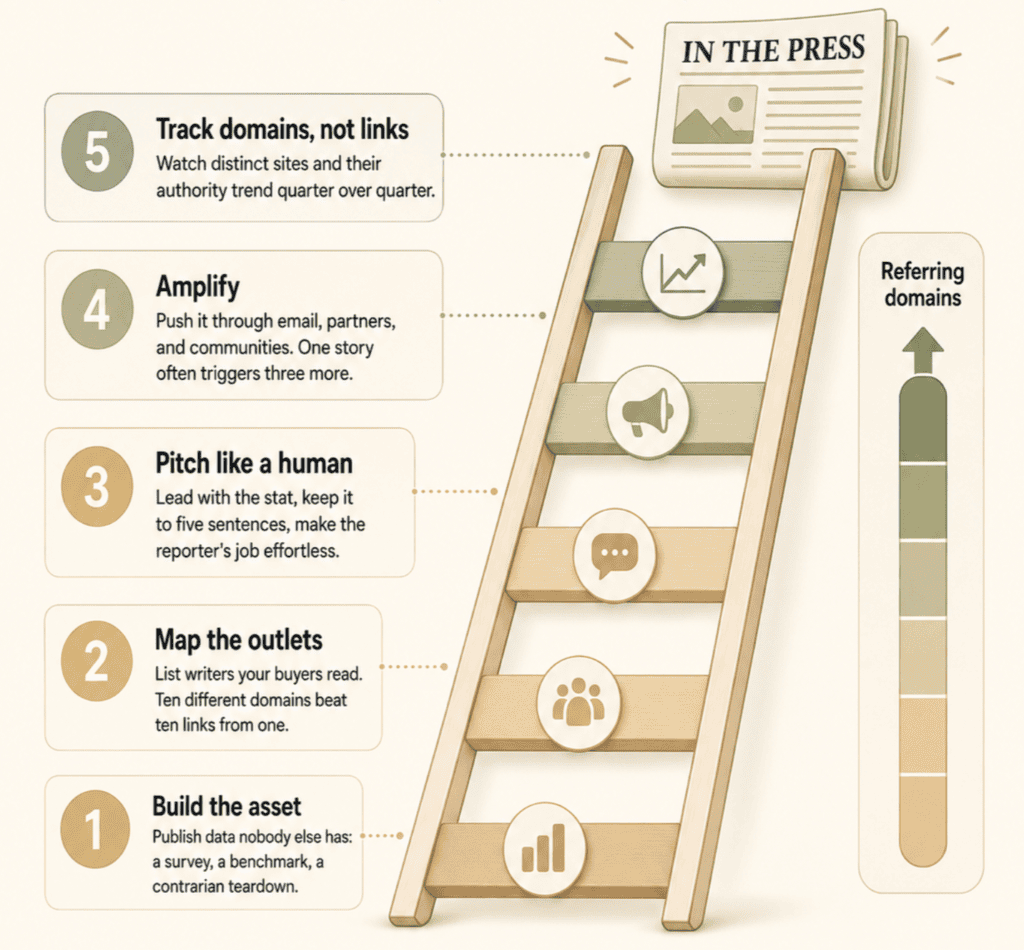
Beyond search engine optimization, every trusted mention is third-party proof that props up brand trust. Earn them with digital PR:
- hand journalists original data or a customer story worth citing,
- skip stuffing anchor keywords,
- and read each reporter’s reply as feedback for the next pitch.
7. Track, measure, and continuously optimize
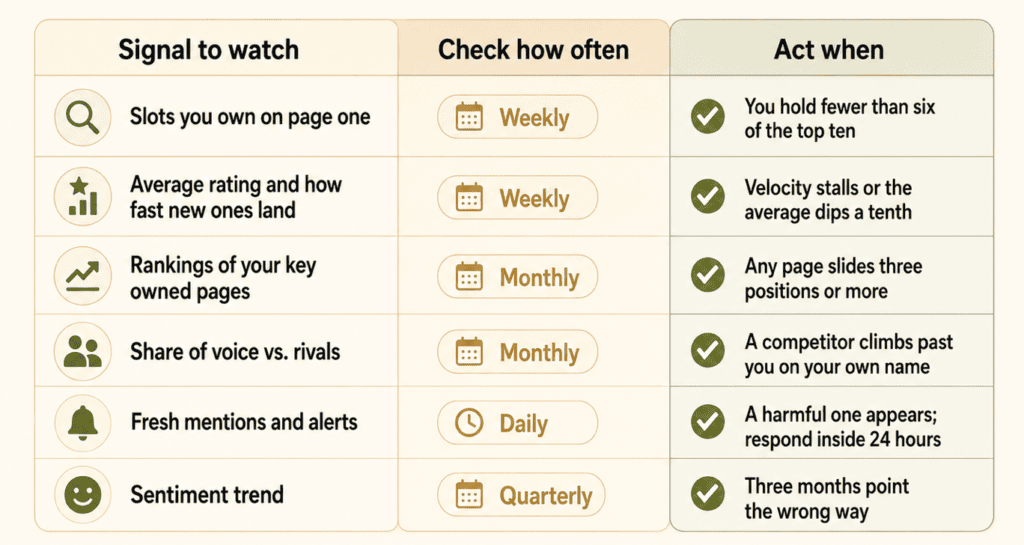
Pick five signals, put them on one dashboard, and set a trigger for each. Track your brand on the search results page, your customer rating and how fast new ones land, and your SEO performance against rivals bidding for your name. Check regularly, optimize the weakest number first, and re-check the next cycle.
Here is what my teammates use:
Final thoughts on building a resilient online reputation
Reputation isn’t luck. It’s engineered through one operating principle: control what you can, improve what already ranks, and outrank what you can’t remove. This guide gives your team a practical way to make the brand buyers find in search match the business they would meet in a sales call. That’s SEO reputation management in practice.
A positive reputation compounds, and it decays without attention. Nearly half of buyers skip a customer-facing company sitting under 20 ratings, so momentum is the whole game.
Where to start: open an incognito Google window and screenshot page one for your name. That search engine snapshot shows which step to run first.
The buyer behavior behind all of this isn’t slowing down. If you want the full picture of how B2B buyers now research, shortlist, and self-qualify before a rep ever gets involved, Omniscient’s 2025 buyer behavior report breaks down what that shift means for how you should be showing up in search.